
This section presents strategic perspectives on advancing sustainable growth in developing countries by encouraging stronger engagement with the private sector. It introduces practical approaches and partnerships that contribute to job creation, expanded access to infrastructure, and the development of future-oriented industries. Through knowledge sharing and collaboration, this section aims to highlight how inclusive engagement with private actors can complement national development goals and support resilient, self-sustaining economic progress.
Compiled by: Kyoungshin Kim, KGGTF Consultant
World Bank–IAEA Formalize Nuclear Cooperation for Developing Countries
Source: World Bank Group Press Release, June 26, 2025
On June 26, 2025, in Paris, the World Bank Group and the International Atomic Energy Agency (IAEA) signed a cooperation agreement to support the safe and responsible use of nuclear energy in developing countries. This agreement marks a major turning point, as the World Bank formally reengages with nuclear energy for the first time in decades, reversing its long-standing stance of staying away from this sector.
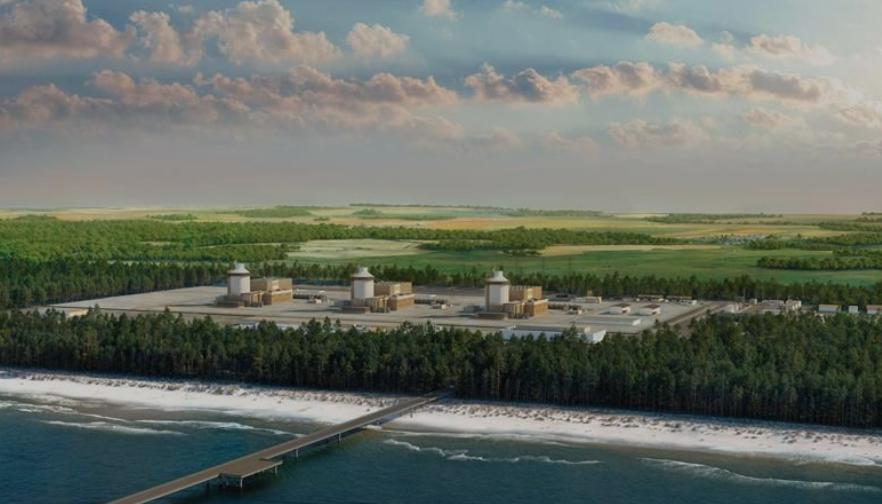
Signed by World Bank President Ajay Banga and IAEA Director General Rafael Grossi, the agreement will be pursued around three main pillars. First, the World Bank will strengthen its expertise across a wide range of areas, including nuclear safety and security, energy planning, fuel cycles, and waste management. Second, the Bank will support the safe life extension of existing nuclear reactors that are reaching the end of their design lives, thereby expanding what is considered the most cost-effective source of low-carbon electricity. Third, the Bank will promote the development of small modular reactors (SMRs), which lower upfront costs and enable flexible deployment, with particular emphasis on making nuclear energy accessible to developing countries.
President Banga stated, “Jobs, hospitals, schools, and water systems all require electricity. Since nuclear provides stable baseload power, the World Bank is once again including this sector in its portfolio for developing countries.” Director General Grossi likewise emphasized, “This agreement signals a global ‘return to realism’ on nuclear power and demonstrates to multilateral development banks and private investors alike that nuclear is a viable tool for energy security and sustainable prosperity.”
Currently, 31 countries operate nuclear power plants that supply about 9% of global electricity and 25% of global low-carbon power. More than 30 other countries, most of them developing nations, are considering or already working with the IAEA to introduce nuclear power. Nevertheless, the expansion of SMRs continues to face financing as its most significant challenge.
UK–US Nuclear Agreement: Declaring a ‘Golden Age’
Source: UK Government Press Release, September 15, 2025
In September 2025, the UK government announced that, during the state visit of U.S. President Trump, the two countries signed a new nuclear agreement. This agreement extends beyond the construction of new nuclear plants; it represents a comprehensive partnership encompassing regulatory cooperation, fuel supply chains, and the development of next-generation reactors.
New Investments and Job Creation
- X-Energy & Centrica: Plans to build up to 12 advanced modular reactors (AMRs) in Hartlepool, England. The project will supply electricity to 1.5 million homes and create up to 2,500 jobs. The total economic impact is estimated at £40 billion, with £12 billion concentrated in the North East region.
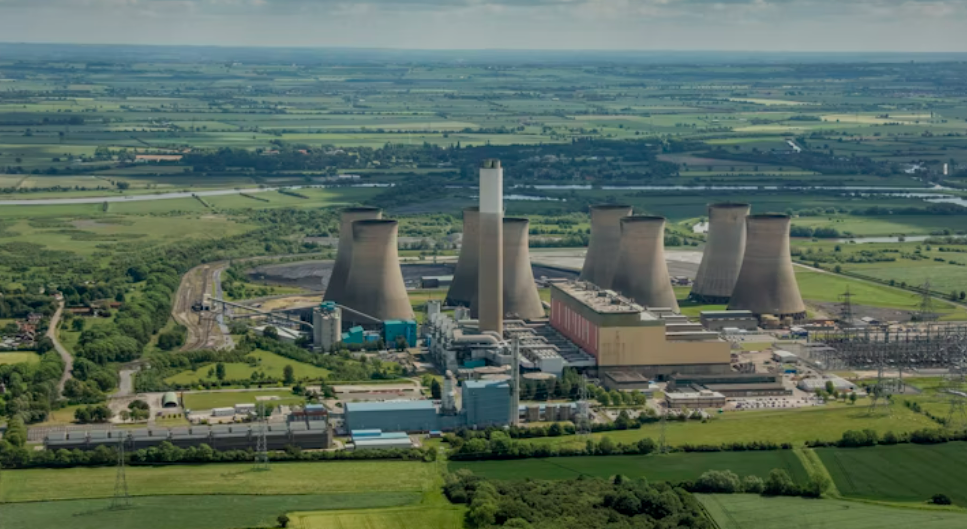
- Holtec, EDF, Tritax: Development of an SMR-powered data center complex on the site of the former Cottam coal-fired power station in Nottinghamshire. The project is valued at around £11 billion and is expected to create thousands of high-skilled construction and long-term operational jobs.
- Last Energy & DP World: Construction of a micro modular reactor (MMR) to power the expansion of London Gateway port and business park, backed by £80 million in private investment.
- Urenco & Radiant: Agreement to supply advanced HALEU fuel to the U.S. market, valued at about £4 million. Urenco is currently building an Advanced Fuels Facility in the UK with government co-funding and is exploring the possibility of establishing a similar facility in the United States.
- TerraPower & KBR: Plans to evaluate sites and consider deployment of Natrium advanced reactors in the UK. Each reactor is expected to support around 1,600 construction jobs and 250 permanent jobs.
Regulatory Cooperation and Energy Security
The agreement also includes provisions for regulatory cooperation. Once a reactor design is certified as safe in one country, the licensing process in the partner country will be significantly accelerated, reducing the approval time from the current three to four years down to about two years. This will speed up project implementation for companies and strengthen energy supply chains.
Prime Minister Starmer described this agreement as the “golden age of nuclear in the UK,” emphasizing that it will contribute to long-term stability in household electricity bills and enhance the nation’s energy independence.
Global Implications of Expanding Nuclear Cooperation
Recent developments show that nuclear energy is once again emerging as an important global solution to pressing energy and climate challenges. Most notably, the World Bank–IAEA agreement marks a meaningful first step in presenting developing countries with tailored nuclear pathways to meet rapidly growing electricity demand. Beyond the construction of power plants, this agreement provides a framework for designing power infrastructure in ways that align with national development strategies and climate commitments (NDCs).
In addition, the UK–US nuclear agreement demonstrates that cooperation in this field can evolve far beyond technology or investment. It presents a comprehensive model of partnership that integrates investment, regulatory cooperation, and fuel supply chains. Such a model has the potential to influence other advanced economies and may set a new standard for international nuclear collaboration.
At the same time, new technologies such as SMRs, AMRs, and MMRs are taking center stage, shifting the industry away from a structure dominated by large-scale reactors toward smaller, more flexible solutions. These technologies are increasingly regarded as essential to both energy security and decarbonization, particularly because of their advantages in enhancing grid stability and enabling deployment tailored to local contexts.
Finally, as both the World Bank–IAEA and UK–US cases illustrate, private sector participation and large-scale capital mobilization are critical drivers of nuclear energy’s resurgence. This dynamic extends beyond individual projects, catalyzing expanded engagement by multilateral development banks and private financial institutions. Ultimately, nuclear cooperation could evolve into a new global paradigm of energy partnership that combines international finance with private investment.
Implications for KGGTF
The World Bank’s formal return to supporting nuclear energy after decades of absence presents new opportunities for KGGTF. As developing countries grapple with rapidly increasing electricity demand, nuclear power is once again gaining attention as a reliable source of baseload energy. This trend directly connects with KGGTF’s ongoing efforts to promote low-carbon infrastructure. In regions such as ASEAN and Africa, where energy security and grid stability remain pressing issues, nuclear cooperation could become a valuable new entry point for deepening partnerships.
Furthermore, as demonstrated by the UK–US agreement, next-generation nuclear projects are now being driven primarily by private companies. This momentum also creates export opportunities for Korean firms. For KGGTF, it provides a foundation to expand its role as a bridge between private enterprises and foreign governments. By leveraging Korea’s expertise in nuclear design, construction, and operations, KGGTF can move beyond financial support to act as a catalyst for industrial collaboration in partner countries.
Equally important, nuclear projects require robust safety regulations and institutional frameworks. This creates significant value for KGGTF’s policy advisory role. For developing countries considering the introduction of nuclear power, establishing legal frameworks, regulatory systems, and safety verification mechanisms is essential. By providing policy and institutional advisory support, KGGTF can both disseminate Korea’s regulatory experience internationally and strengthen the institutional capacity of its partner countries.
Finally, the expansion of next-generation reactors—whether SMRs, AMRs, or MMRs—still faces significant challenges in financing. Here, KGGTF has the opportunity to experiment with and complement financing models by linking nuclear projects to green finance and carbon market mechanisms. In doing so, KGGTF could help generate pioneering examples of incorporating nuclear into new climate finance frameworks, while also encouraging the participation of multilateral institutions and private investors.